 By Legal Radar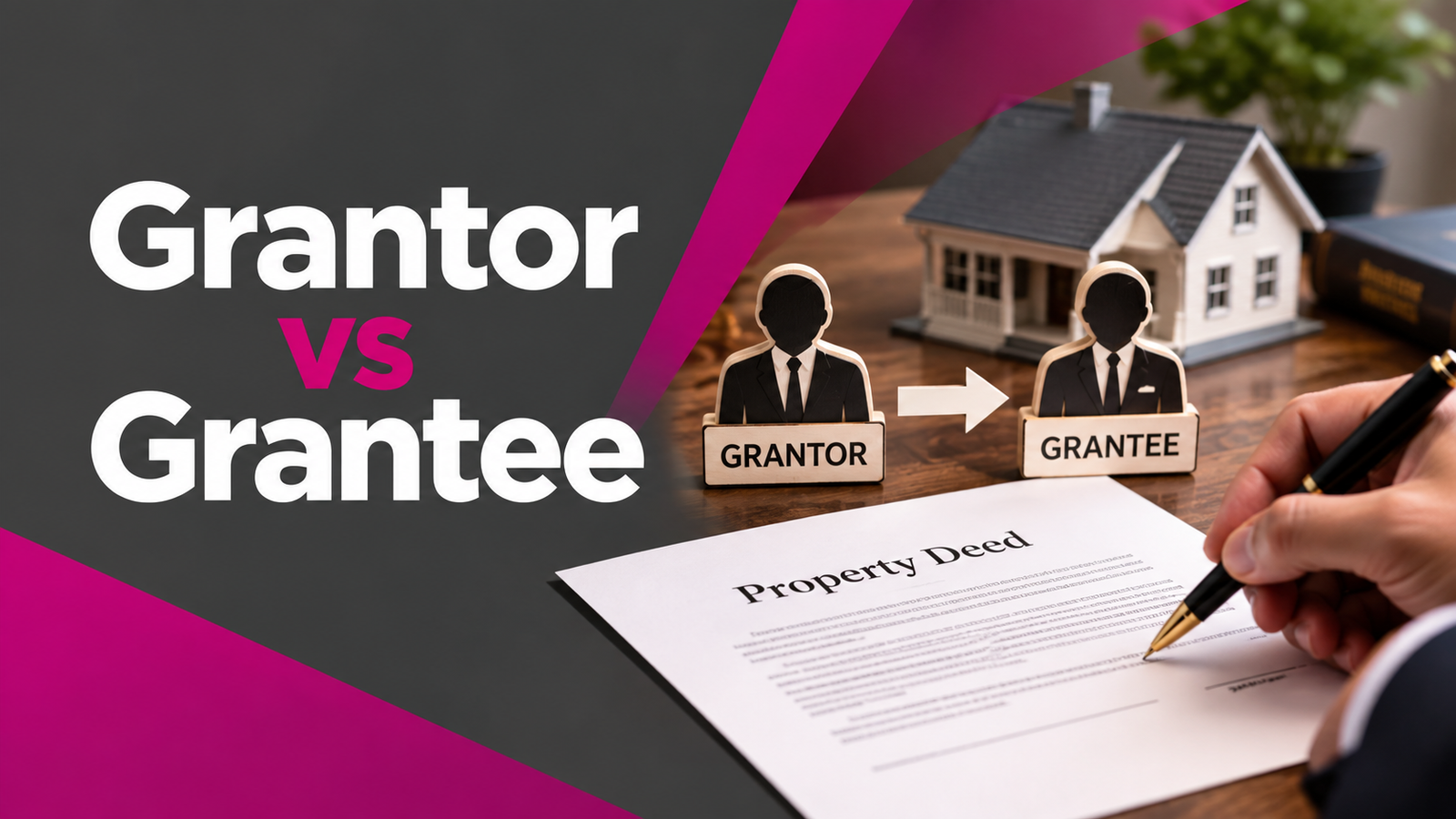
Closing day feels exciting until you stare at a stack of papers filled with terms like grantor and grantee. Many homebuyers and sellers freeze right there. Who signs what? Who takes the risk if a title problem surfaces later?
Roughly one in five first-time buyers report confusion over deed language during closing, according to industry surveys. That confusion can cost money or create future headaches.
This guide explains grantor vs grantee in plain language so you can review any property deed or title document with confidence. You will learn the exact roles each party plays, how different deeds change their responsibilities, and how these terms show up in title searches, trusts, and everyday transfers. By the end, the legal side of ownership transfer will feel straightforward instead of intimidating.
What Is a Grantor in Real Estate?
Think of the grantor as the giver. In any transfer of ownership, the grantor is the person or entity currently holding the property rights and choosing to pass them to someone else.
In a typical home sale, the grantor is the seller. The grantor signs the deed, which is the legal document that actually moves ownership. Until that signature and delivery happen, the transfer is not complete.
A grantor can be an individual homeowner, a married couple, a bank after foreclosure, a trustee of a trust, an executor of an estate, or a company. The key requirement is simple: the grantor must have a legal interest in the property to transfer.
The grantor’s main job is to convey clear title according to the promises made in the specific type of deed. Those promises (called covenants) vary widely. A general warranty deed places heavy ongoing responsibility on the grantor. A quitclaim deed places almost none.
Remember the word ending: “-or” usually signals the party performing the action. The grantor grants. That mental shortcut helps when you scan documents under pressure.
What Is a Grantee in Real Estate?
The grantee is the receiver. This is the person or entity who accepts the property rights and becomes the new legal owner once the deed is properly delivered and recorded.
In a standard purchase, the grantee is the buyer. The grantee’s name appears on the deed as the party receiving the interest. In most states the grantee does not need to sign the deed itself. Acceptance is presumed when the deed is delivered and recorded in the public records.
Grantees can also be tenants (in a lease context), beneficiaries of a trust, or lenders (when a mortgage or deed of trust is recorded). The same person can be a grantee one year and a grantor the next. Your role simply depends on which side of the current transaction you occupy.
Once the transfer is complete, the grantee holds the title and assumes the usual ownership duties: paying property taxes, maintaining the property, and dealing with any future claims that arise under the deed’s terms.
Grantor vs Grantee: The Core Differences at a Glance
| Aspect | Grantor | Grantee |
|---|---|---|
| Primary role | Transfers ownership rights | Receives ownership rights |
| Typical identity | Seller, landlord, trustee | Buyer, tenant, beneficiary |
| Signs the deed? | Yes (required) | Usually no |
| Main responsibility | Deliver clear title as promised | Accept title and record the deed |
| Risk focus | Liability for title defects | Protection level depends on deed type |
| Other common names | Transferor, seller, settlor | Transferee, buyer, recipient |
The relationship is always reciprocal. One party gives. The other receives. The type of deed determines how much protection travels with that gift.
How Grantors and Grantees Appear on Property Deeds
Every valid deed must clearly identify both parties. You will see language such as:
“John A. Smith, grantor, hereby grants, conveys, and warrants to Maria L. Garcia, grantee, the following described real property…”
The legal description that follows (lot and block numbers, metes and bounds, or parcel ID) is critical. A vague street address alone is not enough.
After the parties sign and the deed is notarized, it is recorded in the county where the property sits. Recording gives public notice and protects the grantee against later claims. Most counties index the document under both the grantor’s name and the grantee’s name so future title searches can locate it easily.
Common Types of Deeds and What They Mean for Each Party
General warranty deed
This is the gold standard for residential sales in many states. The grantor makes broad promises that cover the entire history of the property, not just the years the grantor owned it. The grantor agrees to defend the grantee against any title claims that arise later. Grantees strongly prefer this deed because it offers the highest protection.
Special warranty deed (sometimes called a grant deed in western states)
The grantor only warrants against problems that arose during their own period of ownership. Claims from earlier owners fall outside the promise. These deeds appear often in commercial deals, bank sales, and estate transfers. The grantee receives less protection and usually relies more heavily on title insurance.
Quitclaim deed
The grantor transfers whatever interest they currently hold, if any, with zero warranties. If the grantor owns nothing, the grantee receives nothing and has no claim against the grantor. Quitclaim deeds are common in divorces, between family members, or when clearing a cloud on title. They are rarely appropriate for arm’s-length purchases between strangers.
Other specialized forms exist: deed in lieu of foreclosure, transfer-on-death deed, and interspousal transfer deed. In every case the labels remain the same: the party giving is the grantor, the party receiving is the grantee.
The Grantor-Grantee Index and Chain of Title
County recorders maintain two public indexes that title professionals live by: the grantor index and the grantee index. Together they form the backbone of every title search.
To build a chain of title, a searcher works in two directions:
- Start with the current owner and look them up in the grantee index to find the deed that brought the property to them. Note the previous owner’s name.
- Repeat the process backward through successive owners until a sufficient “root of title” is reached (often 40–60 years, depending on state standards).
- Then switch to the grantor index and run each owner’s name forward in time to catch mortgages, liens, easements, or other conveyances that might not appear in the backward search.
This process reveals whether the current grantor has the legal right to transfer and whether any hidden claims could affect the new grantee. A thorough title search plus title insurance is the practical way most buyers protect themselves.
You can often search these indexes yourself online through your county recorder’s website. Look for “grantor-grantee index” or “official records search.” Knowing how the system works helps you understand what the title company is actually checking.
Grantor vs Grantee in Trusts and Estate Planning
The same labels appear outside ordinary sales.
In a living trust, the person who creates the trust and transfers property into it is the grantor (also called settlor or trustor). The trustee holds legal title for the benefit of the beneficiaries. When the trustee later distributes property to a beneficiary, the trustee becomes the grantor of that distribution and the beneficiary becomes the grantee.
Parents sometimes use a quitclaim deed to transfer a house into a trust. In that case the parents are grantors and the trust (or trustee) is the grantee. Later, when the trust distributes the house, roles reverse.
Understanding these shifting labels prevents costly mistakes when reviewing estate documents or funding a trust.
Real-World Examples That Make the Roles Clear
Example 1: Standard home sale
Sarah sells her condo to Tom. Sarah is the grantor. Tom is the grantee. They use a general warranty deed. Sarah signs the deed at closing. The title company records it. Tom now owns the condo free of claims that Sarah promised to defend against.
Example 2: Divorce transfer
After a divorce, one spouse quitclaims their interest in the family home to the other. The departing spouse is the grantor. The remaining spouse is the grantee. No warranties are given because the parties already know the property’s history.
Example 3: Adding a spouse to title
You own a house in your name alone. After marriage you want to add your spouse. You execute a deed listing yourself as both grantor and grantee (along with your spouse as an additional grantee). This creates joint ownership.
Example 4: Mortgage documents
When you take out a home loan, you (the borrower) often appear as grantor on the deed of trust or mortgage, granting a security interest to the lender, who appears as grantee or beneficiary. The roles flip from the purchase deed.
Common Pitfalls and How to Avoid Them
- Assuming every deed offers the same protection. Always ask which type of deed will be used and what warranties it contains.
- Skipping the title search. Even a general warranty deed cannot create rights the grantor never had. Title insurance fills the gap.
- Failing to record the deed promptly. An unrecorded deed leaves the grantee vulnerable to later claims by people who deal with the grantor without notice.
- Using a quitclaim deed for a purchase between strangers. The risk to the grantee is usually too high.
- Ignoring the legal description. A small error can cloud title for years.
- Forgetting that entities (LLCs, trusts, corporations) can be grantors or grantees. Make sure the correct legal name and authorizing signature appear.
Practical Steps When You Review a Deed
- Identify the parties. Confirm who is labeled grantor and who is labeled grantee.
- Check the type of deed and the exact covenants or warranties.
- Verify the legal description matches the property you intend to buy or sell.
- Confirm the grantor has authority to convey (especially if the property is held in a trust or by an estate).
- Make sure the deed will be properly notarized and recorded.
- Review the preliminary title report for exceptions that will survive the transfer.
- Ask your real estate attorney or title officer any questions before you sign.
These steps take only a few extra minutes and can prevent expensive surprises later.
Final Takeaways and Next Steps
The distinction between grantor and grantee is simple once you see it: one party gives the property rights, the other receives them. Everything else (deed type, warranties, title search, recording) flows from that basic relationship.
Knowing these roles lets you read a deed without anxiety, ask smarter questions at closing, and protect your interest whether you are buying, selling, or planning your estate.
If you are in the middle of a transaction or reviewing older documents, pull the actual deed and compare it against the explanations in this guide. When anything still feels unclear, speak with a real estate attorney or a reputable title professional in your state. A short conversation now can save significant trouble later.
Frequently Asked Questions
Who signs the deed, the grantor or the grantee?
Only the grantor must sign in most states. The grantee’s acceptance is shown by receiving and recording the deed.
Can the same person be both grantor and grantee?
Yes. This happens when someone adds a spouse to title or transfers property into their own trust.
What is the difference between grantor vs grantee in a quitclaim deed?
The roles stay the same, but the grantor makes no promises about the quality of title. The grantee takes whatever interest the grantor actually holds, if any.
Does the grantee pay for the title search?
Custom varies by region and contract. Often the buyer (grantee) pays for the lender’s title policy and the seller (grantor) pays for the owner’s policy, but the purchase contract controls.
How do I search the grantor-grantee index myself?
Visit your county recorder’s website or office. Search by name in the appropriate index for the relevant years. Many counties now offer free online access.
Is the grantor always the seller?
In a sale, yes. In other contexts the grantor can be a landlord, a trustee, an executor, or a borrower granting a security interest.
What happens if the grantor does not actually own the property?
A warranty deed may give the grantee a claim against the grantor. A quitclaim deed usually does not. Title insurance is designed to protect against this exact risk.
You May Also Like: Allodial Title: Myths vs Reality in US Law