 By Legal Radar
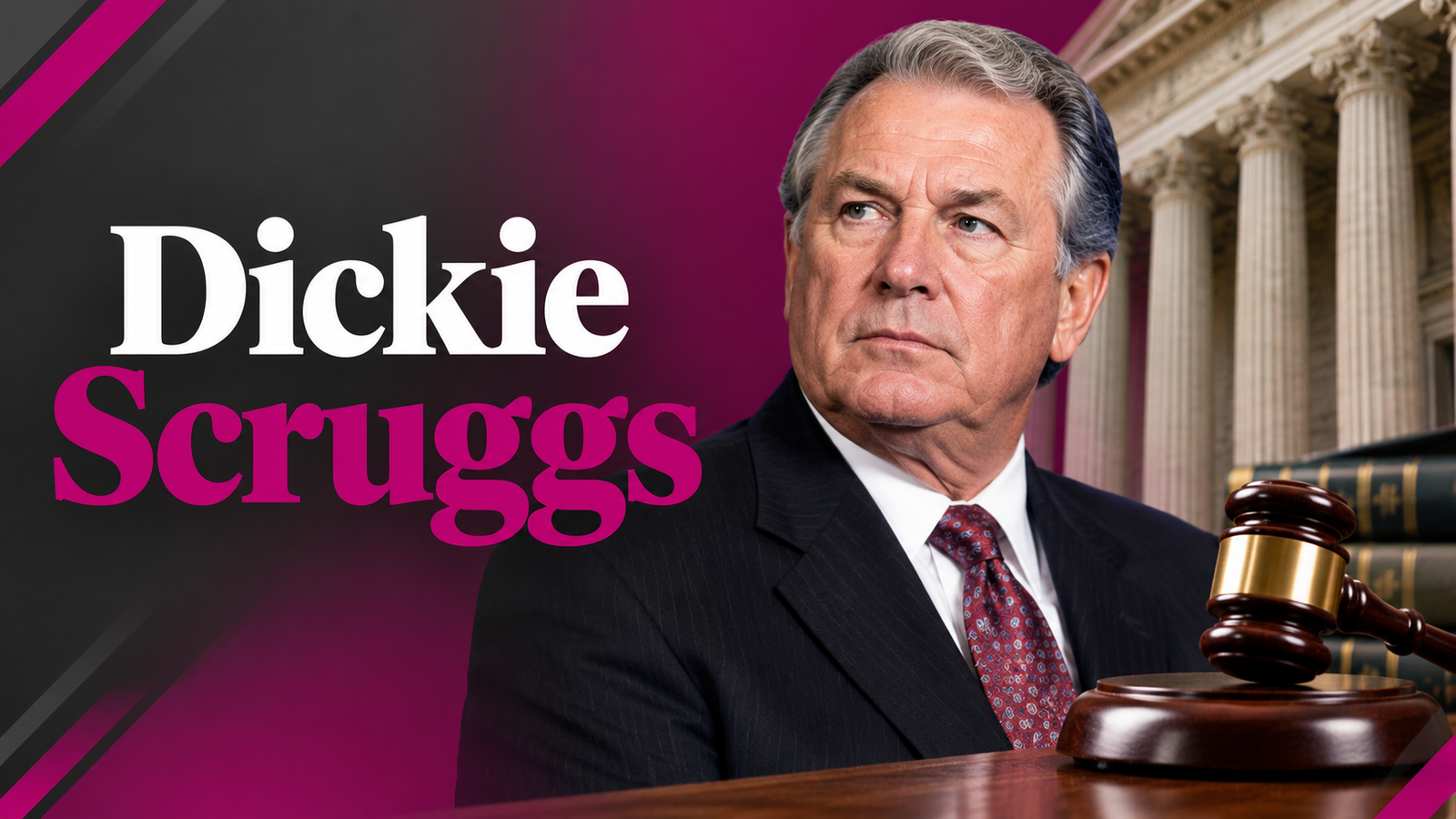
Few American lawyers have climbed as high or fallen as far as Richard “Dickie” Scruggs. In the 1980s and 1990s he helped reshape mass tort litigation, winning massive recoveries for asbestos workers and then engineering the landmark tobacco settlement that forced cigarette makers to pay hundreds of billions. By the early 2000s he was one of the richest and most influential plaintiffs’ attorneys in the country. Then a pair of judicial bribery schemes destroyed his career, cost him his law license, and sent him to federal prison.
This article examines the full arc of Scruggs’s story: his early life and training, the asbestos victories that launched him, the tobacco litigation that made him a national figure, the later cases that kept him in the headlines, the ethical collapse that ended his practice, and the quieter work he has pursued since his release. The goal is a clear, factual account for lawyers, law students, and anyone interested in how high-stakes civil litigation, money, and power can collide.
Early Life, Military Service, and Entry into Law
Richard F. Scruggs was born on May 17, 1946, in Brookhaven, Mississippi, and grew up in Pascagoula. His father left when Scruggs was five. His mother, Helen, worked as a legal secretary at Ingalls Shipbuilding, the dominant local employer. Scruggs later said those summers working at the shipyard gave him firsthand knowledge of the conditions that would later drive his asbestos cases.
He attended the University of Mississippi, joined Sigma Alpha Epsilon, and graduated in 1969. Through Navy ROTC he became a naval aviator, flying A-6 Intruders. He served aboard the USS Franklin D. Roosevelt in the Mediterranean during the 1973 Yom Kippur War period. After leaving the Navy he entered the University of Mississippi School of Law, graduating in 1976. There he formed a lasting friendship with classmate Mike Moore, who would later become Mississippi’s attorney general and Scruggs’s key partner in the tobacco suits.
Scruggs began his career at a well-regarded Jackson firm defending insurance companies. Looking for independence and larger rewards, he returned to Pascagoula and opened his own practice. The decision set the stage for everything that followed.
Building a Practice on Asbestos Litigation
In 1984 a shipyard worker approached Scruggs about breathing problems. Scruggs paid for medical tests that confirmed asbestosis. That single client became the seed of a massive practice. Scruggs eventually represented roughly 4,200 workers directly and served as co-counsel for thousands more. He and partners, including William Roberts Wilson Jr., formed Asbestos Group, P.A., and aggressively pursued claims against manufacturers.
The strategy was straightforward and effective. Scruggs fronted the cost of medical screening, consolidated large numbers of claims, and negotiated settlements rather than trying every case. The approach generated substantial fees (reports place the partners’ take at around $50 million) and established Scruggs as a leading figure in asbestos litigation. It also taught him how to finance high-risk, high-reward mass tort work: use contingency fees and earlier recoveries to bankroll the next campaign.
Mississippi Attorney General Mike Moore later hired Scruggs on contingency to pursue asbestos removal from public buildings. That work produced additional fees for Scruggs’s firm and deepened the professional relationship that would prove decisive in the tobacco cases.
Fee-sharing disputes from the asbestos years lingered for decades and later became entangled with the criminal cases that brought Scruggs down. Those civil battles illustrated a recurring theme: the enormous sums generated by successful mass tort practices often produce bitter fights among the lawyers who share them.
The Tobacco Litigation and the Master Settlement Agreement
The asbestos model supplied both capital and tactics for Scruggs’s most famous campaign. In the early 1990s Moore decided the state should sue cigarette manufacturers to recover Medicaid costs spent treating smoking-related illness. Scruggs signed on as lead outside counsel and principal negotiator. He and Moore filed the Mississippi case in 1994.
The legal theory was novel. Individual smokers had long failed against tobacco companies because of assumption-of-risk and comparative-fault defenses. A state seeking reimbursement for public health expenditures faced no such defense. Scruggs and Moore also benefited from internal industry documents leaked by paralegal Merrell Williams and testimony from former Brown & Williamson executive Jeffrey Wigand. Scruggs personally sheltered Wigand when the whistleblower faced intense pressure.
Mississippi’s case, combined with parallel suits by other states, forced the industry to the table. Four major companies first settled with Mississippi, Florida, Texas, and Minnesota. The remaining states joined, producing the 1998 Tobacco Master Settlement Agreement. The deal required the companies to pay an estimated $246 billion over 25 years, restrict marketing practices, and fund anti-smoking programs. It remains the largest civil settlement in U.S. history.
Scruggs’s firm, Scruggs, Millette, Bozeman & Dent, earned hundreds of millions in contingency fees. Estimates of Scruggs’s personal share range from several hundred million to more than a billion dollars over the life of the payments. The fees generated intense public debate about contingency arrangements in class action lawsuits and government-retained counsel. Scruggs defended the amounts as compensation for extraordinary risk: the lawyers had advanced millions with no guarantee of recovery.
The tobacco work cemented Scruggs’s reputation as the “King of Torts.” His role was dramatized in the 1999 film The Insider, in which actor Colm Feore portrayed a character based in part on him. Scruggs’s house in Pascagoula also appeared in the movie.
Later Campaigns: HMOs, Pharmaceuticals, and Hurricane Katrina
Flush with tobacco money, Scruggs pursued additional mass tort targets. He became a spokesman in class actions against manufacturers of Ritalin, arguing the drug was over-prescribed. He led suits against health maintenance organizations after an Illinois Supreme Court ruling opened the door to broader liability. In 2003 he won a $51 million verdict against Lehman Brothers in a predatory-lending case. Most of the hospital and HMO actions were dismissed before trial.
Hurricane Katrina in 2005 brought Scruggs back into high-volume litigation closer to home. His own Pascagoula house was destroyed. He assembled the Scruggs Katrina Group and sued insurers, primarily State Farm, over denied or underpaid claims for wind versus flood damage. The group secured an $80 million settlement for hundreds of policyholders and an agreement that forced State Farm to reopen tens of thousands of additional claims. Fee estimates for the lawyers reached the tens of millions.
One of Scruggs’s clients was his brother-in-law, then-Senate Majority Leader Trent Lott. The Katrina work kept Scruggs in the public eye and generated still more fee disputes. Those disputes, rather than any of the underlying insurance cases, became the immediate trigger for his criminal prosecution.
The Judicial Bribery Cases
In 2007 a fee fight erupted inside the Scruggs Katrina Group. A Jackson firm, Jones, Funderburg, Sessums, Peterson & Lee, sued Scruggs and others, claiming it had been cut out of a fair share of roughly $26.5 million in fees from a State Farm settlement. The case landed before Mississippi Circuit Judge Henry L. Lackey.
According to the federal indictment and subsequent guilty pleas, intermediaries associated with Scruggs approached Lackey seeking a favorable ruling. Lackey reported the contact to federal authorities and, at their direction, indicated he would accept $40,000. Recordings captured Scruggs agreeing to “take care of” the request. In November 2007 a grand jury indicted Scruggs, his son Zach, law partner Sidney Backstrom, and others on conspiracy and related charges.
Scruggs initially maintained his innocence. On March 14, 2008, he pleaded guilty to conspiracy to bribe a public official. In June 2008 U.S. District Judge Neal Biggers sentenced him to the statutory maximum of five years in prison, a $250,000 fine, and three years of supervised release. Biggers called the conduct “reprehensible” and noted that corrupting a judge is among the worst offenses a lawyer can commit.
A second federal investigation examined Scruggs’s dealings with Hinds County Circuit Judge Bobby DeLaughter, who was presiding over a long-running fee dispute with former asbestos co-counsel William Roberts Wilson. Prosecutors alleged Scruggs used intermediaries, including attorney Joey Langston and former Hinds County District Attorney Ed Peters, to influence DeLaughter. One alleged inducement was a recommendation that DeLaughter be considered for a federal judgeship through Scruggs’s brother-in-law, Senator Lott. In February 2009 Scruggs pleaded guilty to one count of aiding and abetting honest-services mail fraud. Judge Glen H. Davidson sentenced him to seven years, to run concurrently with the earlier term, plus a $100,000 fine. The practical effect was an additional two years of imprisonment.
Scruggs served roughly six years in federal custody. He was released to home confinement in March 2014 and completed his sentence in September 2014. Appeals challenging the second conviction, including a claim based on the Supreme Court’s narrowing of honest-services fraud in Skilling v. United States, were unsuccessful. The U.S. Supreme Court declined review.
On July 28, 2008, the Mississippi Supreme Court permanently disbarred Scruggs. No reinstatement has occurred. The University of Mississippi removed his name from a music building that had been named in honor of him and his wife.
Professional Disbarment, Federal Sentencing, and Aftermath
The twin convictions ended Scruggs’s legal career. They also illustrated the intersection of legal ethics, racketeering charges, and the intense financial pressures that can accompany multi-million-dollar fee disputes. Federal prosecutors treated the schemes as classic public-corruption cases under 18 U.S.C. § 666 (federal programs bribery) and the honest-services fraud statutes. The plea agreements allowed Scruggs to avoid far longer potential sentences while still producing lengthy prison terms and permanent loss of his license.
Civil fallout continued. Former partners and fee claimants pursued additional litigation over tobacco and asbestos proceeds. Some of those suits alleged that settlement funds had been diverted to finance the bribery schemes. Most eventually settled or were resolved through arbitration or court rulings.
Scruggs retained substantial wealth. Quarterly payments from the tobacco settlement continued for years after his release. He has not returned to the practice of law.
Life After Prison and Second Chance Mississippi
While incarcerated, Scruggs taught mathematics to inmates preparing for the GED. The experience shaped his post-release work. After completing his sentence he founded Second Chance Mississippi (also styled 2nd Chance Mississippi), a nonprofit that partners with the state’s community colleges. The organization helps low-income adults earn high-school equivalency diplomas and workforce credentials. Scruggs chairs the board; his son Zach has served as executive director. The group reports assisting several thousand students. Scruggs draws no salary from the organization.
In interviews he has described the prison years as a humbling period that forced him to confront the consequences of his choices. He has also continued to receive residual tobacco fees and has remained in Oxford, Mississippi, where he and his wife Diane had long been active in university and community affairs.
Legal Legacy and Lessons for the Profession
Dickie Scruggs’s career offers a stark case study in the possibilities and perils of modern mass tort litigation. On the positive side, his asbestos and tobacco work demonstrated how creative legal theories, aggressive discovery, and contingency financing can hold large industries accountable for widespread harm. The Tobacco Master Settlement Agreement changed marketing practices, funded public-health programs, and transferred enormous sums from cigarette makers to the states. Those results remain part of the historical record of American product-liability and public-health litigation.
On the negative side, the same high-stakes environment produced chronic fee disputes, aggressive forum-shopping criticisms, and, ultimately, criminal corruption. Scruggs’s bribery convictions reinforced long-standing ethical rules against attempting to influence judges and highlighted the vulnerability of elected state judiciaries to financial pressure. The cases also fueled broader debates about contingency-fee arrangements in government-retained counsel matters and the concentration of wealth and power among a small group of plaintiffs’ lawyers.
For law students and practicing attorneys the story underscores several practical points. First, success in mass torts often depends as much on financing and client aggregation as on pure legal skill. Second, fee-sharing agreements among counsel should be documented with precision; ambiguity invites years of litigation. Third, the line between aggressive advocacy and improper influence is bright, and crossing it can destroy a career regardless of prior achievements. Finally, the professional obligation of candor and integrity toward the tribunal is non-negotiable.
Books such as Curtis Wilkie’s The Fall of the House of Zeus and Alan Lange and Tom Dawson’s Kings of Tort provide detailed narrative accounts. Court records from the Northern District of Mississippi and the Fifth Circuit document the criminal proceedings. The Mississippi Supreme Court’s disbarment order is a matter of public record.
Scruggs’s trajectory from naval aviator to shipyard-workers’ lawyer to tobacco negotiator to convicted felon remains one of the most dramatic in recent American legal history. It illustrates both the transformative potential of class action lawsuits and the personal and professional costs that can follow when the pursuit of advantage overrides ethical constraints.
Frequently Asked Questions
What was Dickie Scruggs’s role in the tobacco settlement?
Scruggs served as lead outside counsel and principal negotiator for Mississippi and later helped coordinate multi-state efforts. The resulting 1998 Master Settlement Agreement required cigarette companies to pay approximately $246 billion over 25 years.
How much money did Scruggs make from tobacco litigation?
His firm earned hundreds of millions in fees. Estimates of Scruggs’s personal share range from several hundred million to more than a billion dollars paid over many years through quarterly installments.
What exactly was Scruggs convicted of?
He pleaded guilty in 2008 to conspiracy to bribe Judge Henry Lackey in a Katrina-related fee dispute and in 2009 to honest-services mail fraud for improperly influencing Judge Bobby DeLaughter in an asbestos fee dispute.
How long did Scruggs spend in prison?
He was sentenced to five years and then to a concurrent seven-year term, effectively adding two years. He served approximately six years and was released in 2014.
Was Scruggs disbarred?
Yes. The Mississippi Supreme Court permanently disbarred him in 2008 following his first guilty plea. He has not been reinstated.
What is Second Chance Mississippi?
It is a nonprofit founded by Scruggs after his release that helps adult Mississippians earn high-school equivalency diplomas and workforce credentials through partnerships with community colleges.
Did Scruggs ever return to practicing law?
No. Permanent disbarment ended his legal career. He has focused on philanthropy and educational programs since leaving prison.
You May Also Like: Vincent Paul Birbiglia: Key Legal Insights & Case Summary